

Why Is Soil Compaction So Important? The 5 Benefits That Prevent Damage and Cost Overruns
There is a well-known principle in construction: a structure is only as good as the ground it stands on. However, attention is often focused on the structure itself, the concrete, or the visible materials, while the true foundation of any project lies beneath our feet.
Every excavation, backfill operation, trench, or earthmoving activity alters the natural structure of the soil, creating air voids and reducing its density. If these voids are not eliminated through proper compaction, problems such as settlement, cracking, deformation, and loss of load-bearing capacity will eventually occur.
Soil compaction consists of reducing these voids through the application of mechanical energy, increasing soil density and improving its mechanical properties.
What Happens When Soil Is Not Properly Compacted?
During excavation, grading, or backfilling operations, soil loses its natural state. Its volume increases, voids appear, and density decreases. As a result:
- Strength is reduced.
- Water penetrates more easily.
- Deformations occur.
- Differential settlement develops.
- The service life of the infrastructure is shortened.
For this reason, compaction is an essential process in:
- Building foundations.
- Roads and highways.
- Parking areas.
- Utility trenches.
- Bridges.
- Dams and embankments.
- Pedestrian paths and cycle lanes.
The 5 Benefits of Proper Soil Compaction
1. Increased Load-Bearing Capacity
The first major benefit is the increase in the soil's load-bearing capacity.
When soil contains large amounts of air and water within its pores, loads are distributed unevenly and the ground can deform easily. Compaction brings soil particles closer together, increases contact points, and improves the transfer of forces.
This allows the ground to more safely support:
- Building loads.
- Heavy machinery traffic.
- Vehicle traffic.
- Civil engineering structures.
In practical terms, a compacted soil can support higher loads with a lower risk of deformation.
2. Greater Structural Stability
Uneven settlement is one of the greatest threats to any infrastructure project.
If one area of the ground is less compacted than another, applied loads can cause uneven settlement, generating additional stresses within the structure. These unforeseen stresses can result in:
- Cracks.
- Surface unevenness.
- Structural deformation.
- Premature structural damage.
Uniform compaction reduces this risk by creating a stable and consistent foundation.
3. Reduced Soil Shrinkage and Expansion
Soils with a high volume of internal voids are particularly sensitive to moisture fluctuations.
During rainy periods, they absorb water and increase in volume. During dry periods, they lose moisture and shrink. This continuous movement can negatively affect:
- Pavements.
- Concrete slabs.
- Sidewalks.
- Shallow foundations.
Proper compaction reduces the volume of voids and limits these dimensional changes, ensuring greater long-term stability.
4. Lower Permeability
Another key benefit is improved water control.
The permeability of soil depends directly on its particle size distribution and the volume of existing voids. The more compacted the soil, the more difficult it becomes for water to pass through it.
This provides several important advantages:
- Reduced water infiltration.
- Improved drainage control.
- Lower risk of internal erosion.
- Greater stability in wet conditions.
For this reason, compaction plays a critical role in hydraulic works, embankments, roads, and structural fills.
5. Reduced Future Settlement
This is probably the benefit most valued by developers, contractors, and rental companies: avoiding costly repairs.
When soil is not properly compacted, consolidation continues after construction has been completed. The weight of the structure, traffic loads, and service loads gradually compress the soil, causing settlement over time.
These issues often lead to:
- Pavement repairs.
- Trench reopening.
- Level corrections.
- Claims and warranty issues.
- Increased maintenance costs.
Proper compaction from the outset is always more cost-effective than correcting problems later.
Compaction Also Depends on Soil Type
Not all soils behave in the same way.
Granular soils such as sand and gravel generally respond very well to vibration-based compaction, while cohesive soils such as silt and clay require equipment capable of combining vibration, impact, and kneading action.
This makes proper equipment selection essential:
- Rammers.
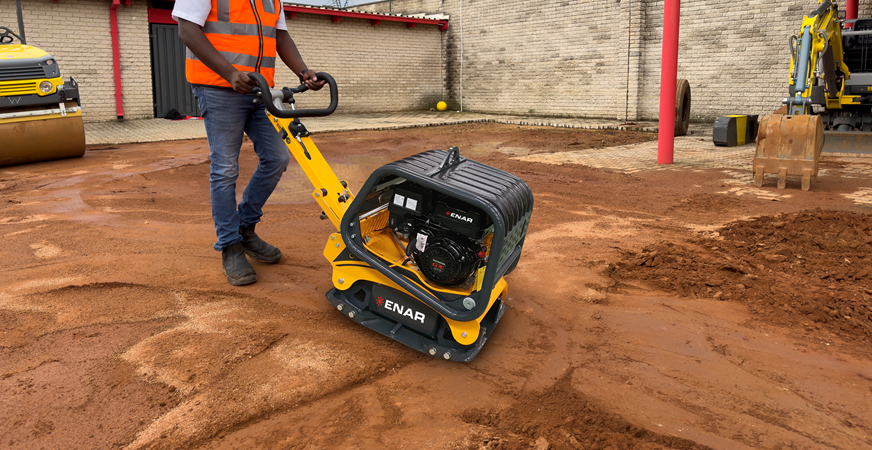
- Vibratory plates.
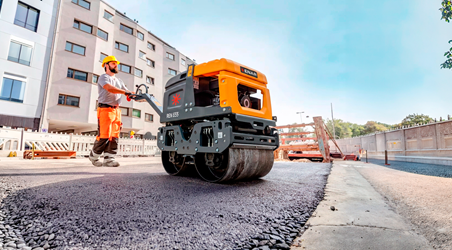
- Vibratory rollers.
The right compaction equipment has a direct impact on productivity, compaction quality, and project costs.
Conclusion
Soil compaction is much more than just another stage of earthworks. It is the process that determines the load-bearing capacity, stability, and durability of the entire construction project.
Increasing soil strength, improving stability, controlling moisture, reducing permeability, and preventing future settlement are benefits that directly impact construction quality and project profitability.
In construction, compaction failures often become visible years later, when remediation is far more expensive. That is why investing in proper compaction and selecting the right equipment remains one of the most cost-effective decisions on any jobsite.
.webp)
.webp)