

Trench Compaction for Pipes and Utilities: Mistakes That Lead to Future Settlement | ENAR
The installation of pipes, conduits, and other buried utilities is a common operation in any urban development or infrastructure project. However, many of the sinkages and deformations that appear years later on roads, sidewalks, or paved areas share a common cause: poor trench compaction.
Proper backfill compaction is one of the most important factors in ensuring infrastructure stability and preventing future settlement.
Why Is Proper Trench Compaction So Important?
When a trench is excavated, the natural ground is disturbed and loses part of its load-bearing capacity. After the pipe is installed, the backfill material must be placed and compacted in a controlled manner to restore that supporting capacity.
Insufficient compaction can lead to:
- Differential settlement.
- Sinkage in roads or sidewalks.
- Damage to pavements and structures.
- Pipe displacement or deformation.
- Costly repair work in the future.
Good compaction increases soil density, improves load-bearing capacity, and reduces the risk of future deformation.
Mistake 1: Failing to Properly Compact the Trench Bottom
One of the most common mistakes is installing the pipe on an insufficiently compacted base.
Industry standards and best practices indicate that the trench bottom should be compacted before laying the pipe, as access to this area becomes much more difficult once the pipe is in place.
If the base contains voids or soft spots:
- Loads are not distributed evenly.
- Point loads may develop.
- The risk of pipe deformation increases.
- Future settlement becomes more likely.
Mistake 2: Compacting Only the Upper Backfill
On many projects, attention is focused on the upper backfill while the area surrounding the pipe is neglected.
However, the zone between the trench bottom and approximately 30 cm (12 in) above the pipe is one of the most critical areas in the entire trench.
Compaction must be performed:
- Beneath the pipe.
- On both sides of the pipe.
- In the upper cover zone.
Incomplete compaction in any of these areas can lead to ground movement once the infrastructure is put into service.
Mistake 3: Failing to Compact Symmetrically
Another common mistake is filling and compacting one side of the pipe before the other.
Best practices require material to be placed and compacted simultaneously on both sides of the pipe to avoid:
- Lateral displacement.
- Pipe uplift.
- Uneven stresses on the installation.
This is especially important for large-diameter pipelines, where proper load distribution is essential.
Mistake 4: Using the Wrong Compaction Equipment
Not all compaction equipment is suitable for every stage of the job.
The right choice depends on:
- Soil type.
- Trench width.
- Trench depth.
- The area being compacted.
Rammers are particularly effective for:
- Narrow trenches.
- Cohesive soils.
- Confined work areas.
- Compaction around pipes.
Thanks to their high impact force, they can achieve high compaction levels in difficult-to-access areas.
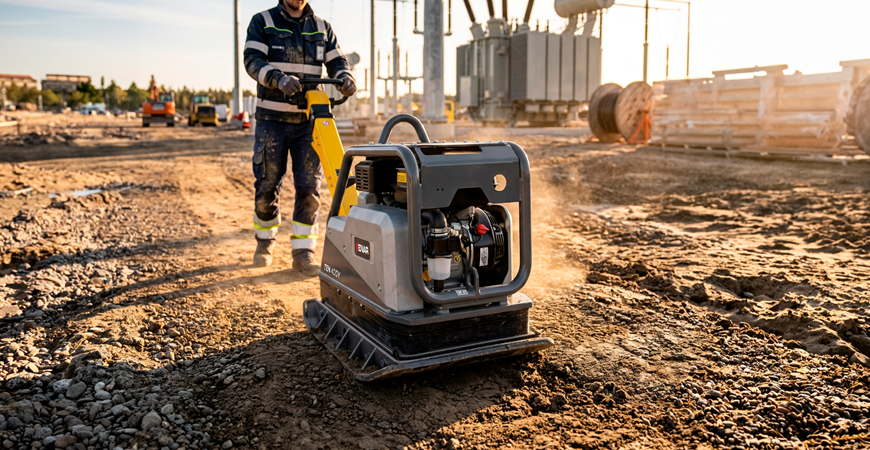
Vibratory plates are ideal for:
- Granular soils.
- Wider trenches.
- Upper backfill layers.
Reversible vibratory plates also offer high productivity on larger surfaces.
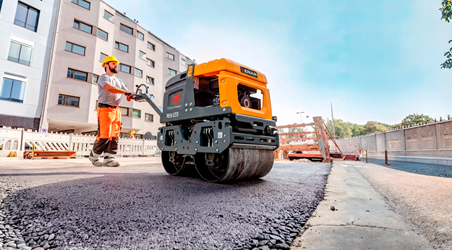
Rollers are mainly used for:
- Upper backfill layers.
- Final trench closure.
- Large surface areas.
However, they often have limitations in narrow spaces and around pipes.
Mistake 5: Working with Backfill Layers That Are Too Thick
Productivity should never come at the expense of quality.
One of the most common mistakes is placing overly thick backfill lifts in an attempt to save time.
When the lift thickness exceeds the compaction capability of the equipment:
- The surface may appear properly compacted.
- Lower layers remain insufficiently densified.
- The risk of settlement increases significantly.
The appropriate lift thickness depends on both the soil type and the equipment being used.
Mistake 6: Ignoring Moisture Content
Water plays a fundamental role in soil compaction processes.
Excessively dry soil makes particle rearrangement difficult, while overly wet material loses stability and reduces compaction efficiency.
Working close to the optimum moisture content allows you to:
- Improve the achieved density.
- Reduce the number of passes.
- Optimize project productivity.
Mistake 7: Failing to Ensure Proper Bonding Between Backfill and Trench Walls
The connection between the existing ground and the backfill material is an aspect that often goes unnoticed.
According to technical recommendations, compaction should be carried out from the trench walls toward the center, ensuring proper bonding between both materials.
Poor compaction in these areas can lead to differential movement and localized settlement over time.
How to Prevent Future Settlement
Preventing settlement starts long before the trench is closed.
The keys to long-lasting compaction are:
- Selecting suitable backfill material.
- Properly compacting the trench base.
- Working in controlled lifts.
- Maintaining adequate moisture levels.
- Using the appropriate compaction equipment.
- Verifying the achieved compaction levels.
Conclusion
Most settlement issues that appear after work on buried utility networks are not caused by the installed pipe itself, but by inadequate backfill compaction.
Proper execution of the work, combined with the correct selection of rammers, vibratory plates, or rollers, helps ensure trench stability, protect underground utilities, and prevent costly future repairs.
The ENAR compaction range offers solutions designed for every stage of the job, helping construction professionals achieve efficient, safe, and long-lasting compaction on any infrastructure project.
.webp)
.webp)
.png) PH
Tamping Rammer
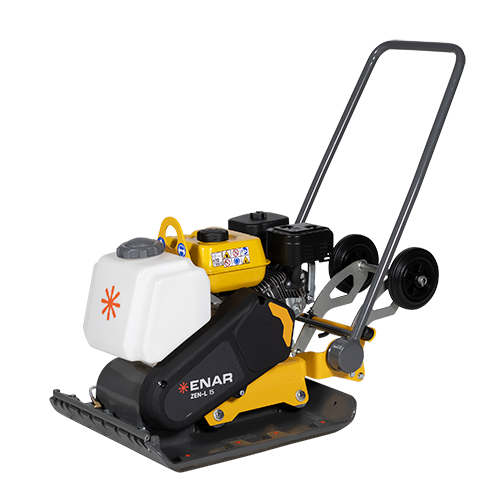 ZEN-L
Single-direction vibratory plate
.png) TEN 40
Reversible Plate Compactor