

-convertido-de-png.webp)
How to Choose a Vibrating Screed: Guide for Concrete Slabs | ENAR
How to Choose the Right Vibrating Screed for Your Concrete Slab
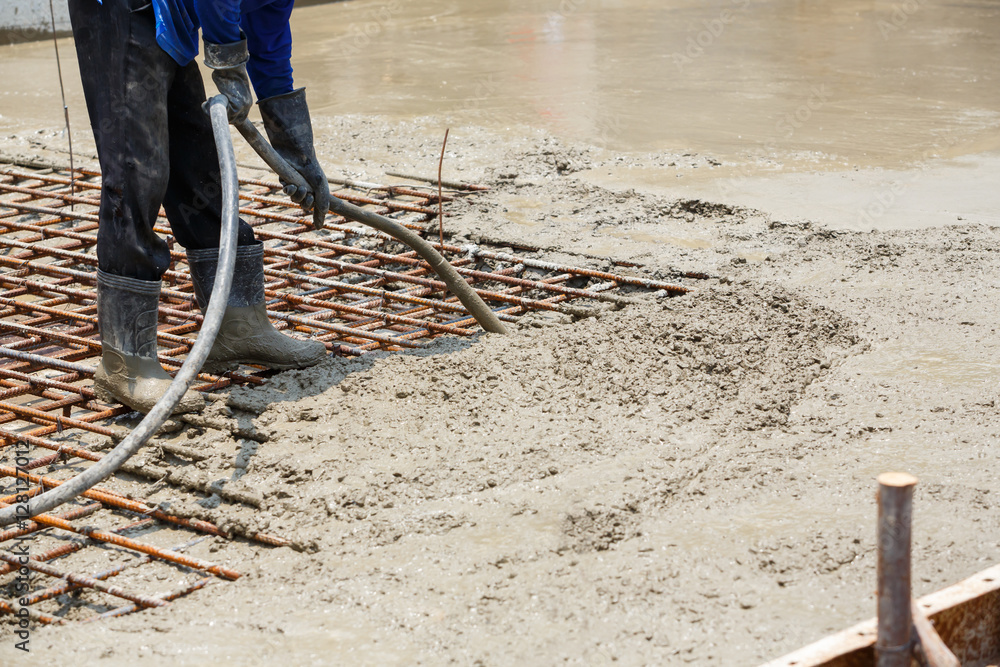
The success of a concrete slab depends on two key factors: material compaction and surface flatness.
While internal vibrators remove air from deep layers, the vibrating screed is essential for surface vibration (up to 15 cm thickness) and accurate leveling before finishing operations.
However, not all construction sites have the same requirements. From residential slabs to industrial floors or roadworks, selecting the right screed depends on:
- Profile type
- Working width
- Power source
- Jobsite conditions
In this guide, ENAR provides a practical, jobsite-oriented approach to help you choose the right vibrating screed for your application.
Choosing the Right Profile Type
The screed profile defines how the concrete is handled and the level of finish achieved.
Single Profile Screed (L-Type)
This is the most common and user-friendly vibrating screed. It features a curved L-shape profile, allowing the operator to pull the concrete while leveling the surface.
Advantages:
- Lightweight and easy to handle
- Operated by a single user
- Ideal for small and medium jobs
Applications:
- Residential slabs
- Terraces and driveways
- Walkways and light construction
Double Profile Screed
Composed of two parallel profiles, this system is designed to operate on pre-leveled guides or rails.
Advantages:
- Maximum flatness and accuracy
- Greater weight improves vibration penetration
- Ideal for demanding specifications
Applications:
- Large industrial slabs
- Road construction
- Thick concrete layers with tight tolerances
Symmetrical Profile Screed
This type features a symmetrical profile design, allowing the operator to work efficiently in both directions (push and pull), without the need for guides.
Advantages:
- High versatility and productivity
- Consistent vibration across the surface
- Easy handling and flexibility on site
Applications:
- Medium-sized slabs
- Residential and commercial projects
- Jobs requiring flexibility without rail systems
Example ENAR: HURACAN
Extendable Screed
A variation of the double profile system, allowing adjustable working width through a telescopic structure.
Advantages:
- Maximum versatility
- One machine adapts to different working widths
- Reduces need for multiple profiles
Applications:
- Variable slab widths
- Contractors managing diverse projects
Selecting the Right Screed Length
The basic rule is simple:
👉 The screed length must match the width of your concrete pass.
Recommended ranges:
- 1.5 m – 2 m: Ideal for confined spaces, sidewalks, and small repairs. Single operator use.
- 2.5 m – 3 m: Standard size for residential slabs and garages.
- 4 m – 5 m (or more): Suitable for large industrial floors
⚠️ Above 3 m, the use of double screeds on rails with two operators is recommended for optimal performance and flatness.
Choosing the Right Power Source
The jobsite environment determines the best power solution.
Petrol Engine (4-stroke)
Best for:
- Outdoor construction
- Roadworks
- Sites without electricity
Key benefits:
- Complete autonomy
- High power for long profiles
- Immediate operation
👉 Typically equipped with Honda engines or equivalent, known for reliability.
Electric Motor (230V – corded)
Best for:
- Indoor construction
- Warehouses and enclosed areas
- Sites with emissions restrictions
Key benefits:
- Reduced noise
- Zero emissions
- Low maintenance
⚠️ Limitations: Requires cable management on fresh concrete
Battery-Powered Screed (ENAR e-BATT Series)
Best for:
- Urban projects (Low Emission Zones)
- Night work
- Indoor applications
Key benefits:
- Zero emissions
- Low noise levels
- Total freedom of movement (no cables)
👉 Combines electric sustainability with petrol-like mobility
Ergonomics and Operator Safety
Working with a vibrating screed is physically demanding, especially on large slabs or continuous pours. For this reason, ergonomics should never be underestimated when selecting equipment. A well-designed machine not only improves productivity but also significantly reduces operator fatigue over the course of the day.
Modern vibrating screeds, such as those in the ENAR range, are designed with operator comfort in mind. Features like anti-vibration handles mounted on silent blocks help absorb much of the vibration before it reaches the operator’s arms. This reduction in transmitted vibration is essential for minimizing the risk of hand–arm vibration exposure and preventing long-term musculoskeletal disorders.
In practical terms, better ergonomics translate into more consistent work quality. Operators can maintain control more easily, work longer with less strain, and achieve a more uniform finish across the entire slab.
Conclusion: The Right Tool for the Right Job
There is no single vibrating screed that fits every job. The right choice depends on the specific characteristics of each project, including slab size, required flatness, and working conditions on site.
Selecting the appropriate profile, length, and power source allows contractors to optimize both performance and efficiency. With a well-matched setup, it is possible to achieve consistent results across a wide range of applications, from residential slabs to large industrial floors.
ENAR’s vibrating screed range has been developed to cover this diversity, offering reliable solutions for contractors, distributors, and rental companies working in different environments and project scales.
Ready to Equip Your Next Project?
ENAR vibrating screed profiles are designed for durability and flexibility. Manufactured from high-strength aluminum and fully interchangeable, they ensure long-term accuracy and adaptability across multiple applications.
👉 Exploring the full ENAR vibrating screed range is the first step toward selecting the right equipment for your next jobsite and achieving a professional concrete finish every time.

Related News
.webp)
.webp)
.png) HURACAN
Light vibrating screed
HURACAN
Light vibrating screed