

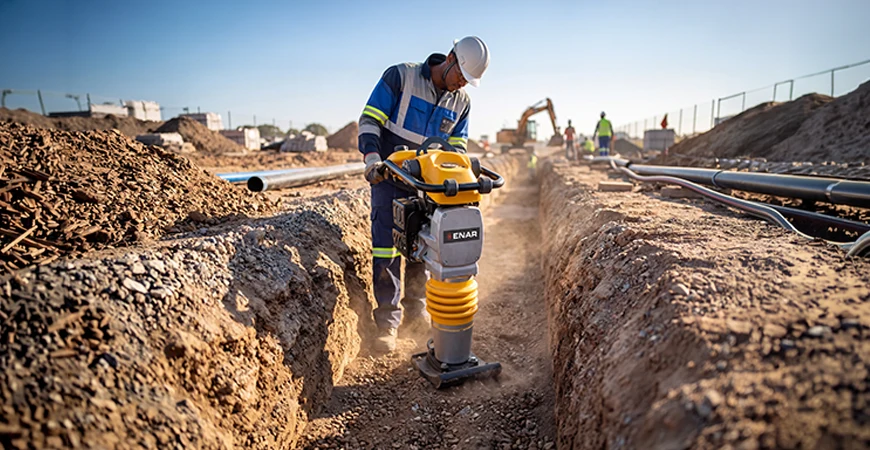
Complete Guide to Soil Compaction Control | ENAR
In any construction project, from residential developments to underground utility networks, soil compaction is the first step in ensuring the long-term durability of the infrastructure. However, one key question remains: how can you tell whether the compaction achieved is truly sufficient?
A surface that appears to be properly compacted may still contain weak areas that can eventually lead to settlement, cracking, or deformation. For this reason, compaction control has become an essential part of quality assurance processes in earthworks and civil engineering projects.
Why Is Compaction Control Necessary?
The objective of compaction is to reduce the voids within the soil, increasing its density and load-bearing capacity. When the material reaches the proper density, its strength improves and the risk of future deformation is significantly reduced.
However, two areas compacted with the same equipment can produce very different results depending on factors such as:
- Soil type
- Particle size distribution (gradation)
- Moisture content
- Lift thickness
- Number of passes performed
- Equipment used
That is why it is essential to measure and objectively verify the results achieved on site.
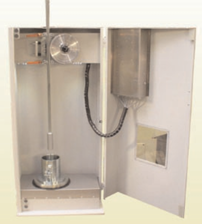
What Is Proctor Density?
The most widely used international reference for evaluating compaction is Proctor density.
The Proctor test determines the maximum dry density that a specific soil can achieve under defined compaction conditions, as well as its optimum moisture content.
During the test, several samples of the same material are compacted at different moisture levels. The resulting curve allows engineers to identify:
- The maximum dry density of the soil
- The optimum moisture content for compaction
- The behavior of the material under compaction energy
What Does 95%, 100% or 103% Proctor Mean?
Project specifications generally require minimum percentages of the laboratory-determined Proctor density.
For example :
- 95 % Proctor: commonly required for general backfill applications.
- 100 % Proctor: frequently specified for structural layers and areas subjected to significant loads.
- Values above 100% Proctor: may be required for highly demanding structural applications.
The degree of compaction is calculated by comparing the dry density achieved on site with the maximum dry density obtained through the Proctor test.
Main Methods for Compaction Control on Site
Several methods are available to verify compaction quality. The choice depends on the soil type, site accessibility, and level of accuracy required.
Core Sampling Method
This method consists of extracting a sample of compacted soil using a cylinder of known volume.
The dry mass of the sample is then determined in a laboratory to calculate the material density. It is one of the standard methods used for direct compaction control.
Sand Replacement Method
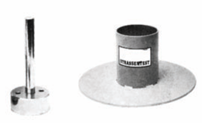
After excavating a small volume of compacted soil, the void is filled with calibrated sand to determine the exact volume removed.
By combining the measured volume with the sample weight, the dry density of the soil can be calculated.
Water Balloon Method
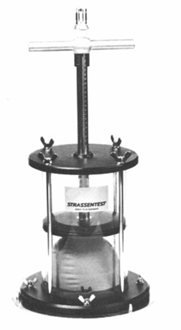
This method is similar to the sand replacement method but uses a flexible water-filled balloon to measure the volume of the excavation.
It is commonly used when highly accurate measurements are required.
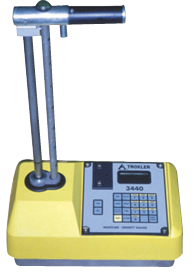
Nuclear Density Gauge
A nuclear density gauge can provide density and moisture content readings in just a few minutes.
Its main advantage is the speed and accuracy of the results. However, it requires trained and authorized personnel because it uses radioactive sources.
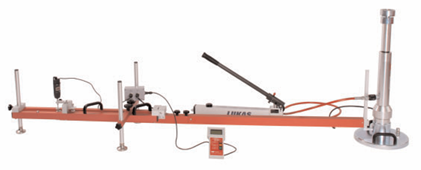
Dynamic Plate Load Test
Increasingly used in civil engineering projects, this method measures the deformation modulus of the ground through controlled impacts.
It provides a fast assessment of bearing capacity and is particularly useful in confined spaces and trench applications.
Humidity: The Factor Many People Overlook
One of the most important aspects of compaction control is the soil's moisture content.
When soil is too dry, internal friction between particles increases, making it difficult to achieve high density levels. Conversely, excessive moisture can fill the void spaces and prevent effective compaction.
For this reason, the Proctor test also determines the optimum moisture content for each soil type. Working close to this value can significantly improve compaction results.
Proper Compaction Must Be Verified, Not Assumed
In road construction, residential developments, industrial platforms, and utility trenches, insufficient compaction may take months or even years before its consequences become visible.
Differential settlement, pavement deformation, and damage to underground infrastructure often share the same root cause: inadequate compaction or the absence of quality control.
That is why combining the right equipment with reliable verification procedures is the best way to ensure a durable and safe infrastructure.
Conclusion
Soil compaction is a critical process, but its success can only be confirmed through objective measurement. The Proctor test provides the benchmark, while various field control methods verify that the required density has been achieved.
Compaction control not only reduces technical risks. It also helps prevent future repairs, claims, and costs associated with settlement or structural failures.
.webp)
.webp)
.png) PH
Tamping Rammer
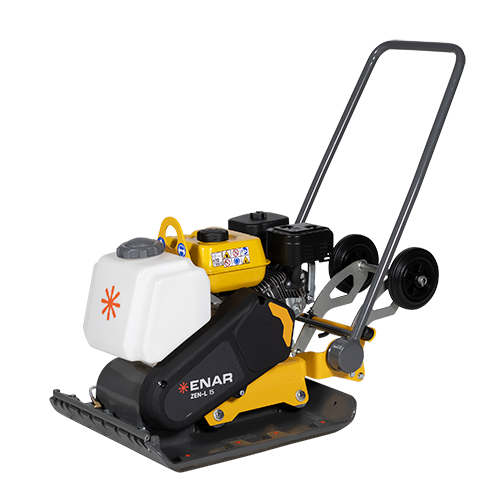 ZEN-L
Single-direction vibratory plate
.png) TEN 40
Reversible Plate Compactor