

.webp)
Electric Construction Machinery: Trends
Electric and Battery-Powered Machines: Where Does the Construction Sector Really Stand?
The construction sector is undergoing a profound transformation. The rise of electric construction machinery and electric equipment is redefining jobsite practices: reduced noise levels, lower CO₂ emissions, and improved operator comfort.
However, this transition raises several questions: what are the current limitations of electric equipment? What can we expect in the coming years? And how can companies take advantage of these innovations to remain competitive?
The Electrification of Construction: A Growing Trend
The adoption of electric machines on jobsites is accelerating. According to Mordor Intelligence, the European market for electric construction equipment is expected to grow at an annual rate of 12%–15% through 2030.
Key Adoption Drivers
- Regulatory pressure: European legislation imposes a progressive reduction of pollutant emissions and noise levels on construction sites.
- Customer demand: Developers and project owners prioritise sustainable, environmentally friendly solutions.
- Technological progress: Lithium-ion batteries now offer sufficient autonomy for most applications, with lighter and more manageable tools.
The main segments impacted include:
- Compaction: electric vibratory plates, rollers, and rammers.
- Surfacing and finishing: battery-powered screeds, power trowels, and finishing tools.
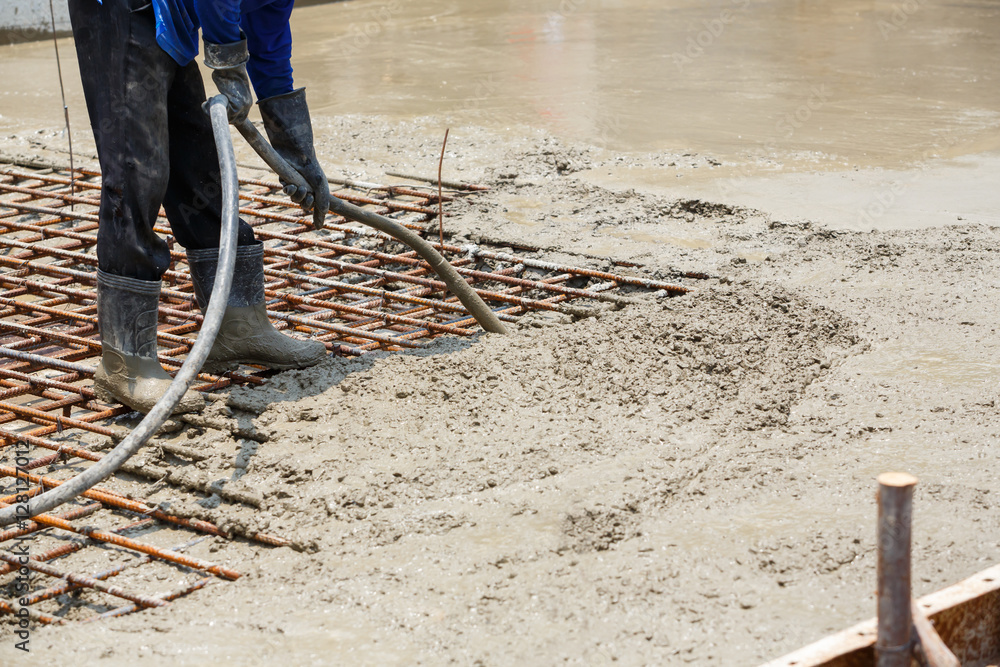
- Concrete vibration: portable vibrators and battery-powered eccentric motors.
The Advantages of Electric Machines
Electric construction equipment provides multiple benefits:
- Noise reduction: In urban environments, noise levels are a critical factor. Electric motors allow work in sensitive areas without disturbing residents.
- Emission reduction: Battery-powered machines emit no exhaust gases or fine particles, contributing to more ecological operations and compliance with environmental regulations.
- Simplified maintenance: Electric motors require less maintenance than combustion engines — no oil, no fuel, and fewer complex parts — reducing overall costs and jobsite interruptions.
- Comfort and ergonomics: Tools are easier to handle, operator fatigue is reduced, and vibrations are better controlled, enabling precise and efficient work.
ENAR examples:
- VIB-BAR E-BATT: a battery-powered portable concrete vibrator ideal for precise slab compaction.
- TORNADO E-BATT: a lightweight battery-powered screed for efficient and quiet finishing.
Limitations and Challenges of Electric Machines
Despite their advantages, electric machines still present certain constraints:
- Limited autonomy: current batteries require frequent recharging on large-scale jobsites.
- Power for heavy-duty tasks: combustion engines remain necessary for some intensive applications.
- Initial cost: electric machines involve a higher upfront investment, but ROI improves through reduced fuel and maintenance costs.
ENAR has developed solutions to overcome some of these limitations, such as BOXEL E-BATT, a battery-powered high-frequency electronic converter offering both power and autonomy.
Market Data and Forecasts Through 2030
According to Techtime, electric construction machinery in 2026 and electric construction equipment will continue to expand due to:
- Decreasing battery costs.
- Higher energy density.
- Modular tools combining power and autonomy.
Emerging Trends in Electric Construction:
Mobility and portability
Battery-powered vibrators and screeds simplify work in restricted or hard-to-reach jobsites.
Connectivity and smart tools
Some tools integrate sensors to monitor:
- Performance
- Remaining battery life
- Maintenance needs
Hybridisation
Machines combining combustion engines and battery systems offer flexibility and reduced emissions, ideal for large-scale works.
ENAR example: SPYDER E-BATT, a portable high-frequency battery-powered vibrator combining autonomy and power.
Opportunities for Companies
- Reduced acoustic and environmental impact
Urban and sensitive worksites benefit from reduced noise and emissions thanks to electric equipment.
- Image and competitiveness
Adopting sustainable solutions enhances a company’s reputation with clients and public authorities, especially during public tender processes.
- Cost optimisation
Less fuel consumption, reduced maintenance, and fewer interruptions lead to improved global profitability.
Practical Case: A Modernised Urban Jobsite
On a concrete slab project:
- Battery-powered portable vibrators ensure homogeneous compaction without disturbances.
- Tornado E Batt screeds guarantee a high-quality finish.
- Maintenance is simplified, with fewer breakdowns and less downtime linked to combustion engines.
This approach demonstrates that the electric transition is not only feasible, but also strategically advantageous.
Trends 2030
The construction sector will evolve towards progressive hybridisation:
- Electric equipment for urban areas and precision tasks.
- Combustion engines for heavy-duty and long-duration work.
ENAR’s E Batt range, with solutions such as VIB-BAR, TORNADO, and SPYDER, illustrates this transition by offering autonomy, power, and comfort for modern jobsites.
The rise of electric construction machinery and electric construction equipment is transforming the sector. Companies that adopt reliable electric tools today:
- Reduce their environmental footprint.
- Optimise costs and productivity.
- Prepare their worksites for tomorrow’s regulations.
Investing in solutions such as those in ENAR’s E-BATT range is a strategic choice to remain competitive, ensure high-quality work, and meet the expectations of project owners and public institutions.
Related News
.png)
.webp)
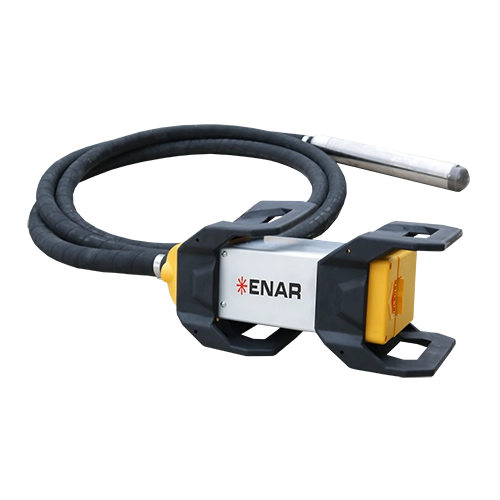 SPYDER E-BATT
Battery-powered portable vibrator
SPYDER E-BATT
Battery-powered portable vibrator
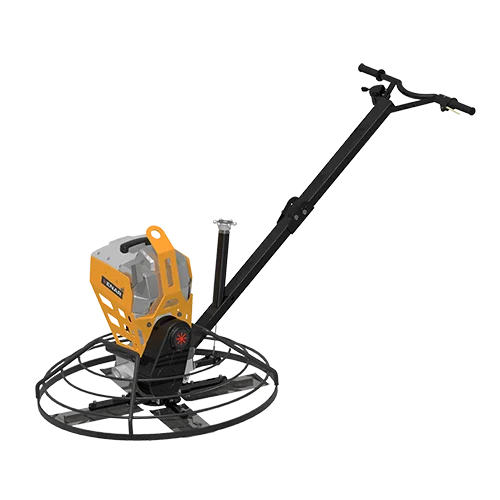 TIFON E-BATT
Power Trowel
TIFON E-BATT
Power Trowel